Changing of the Tides - Nellie Nakhel
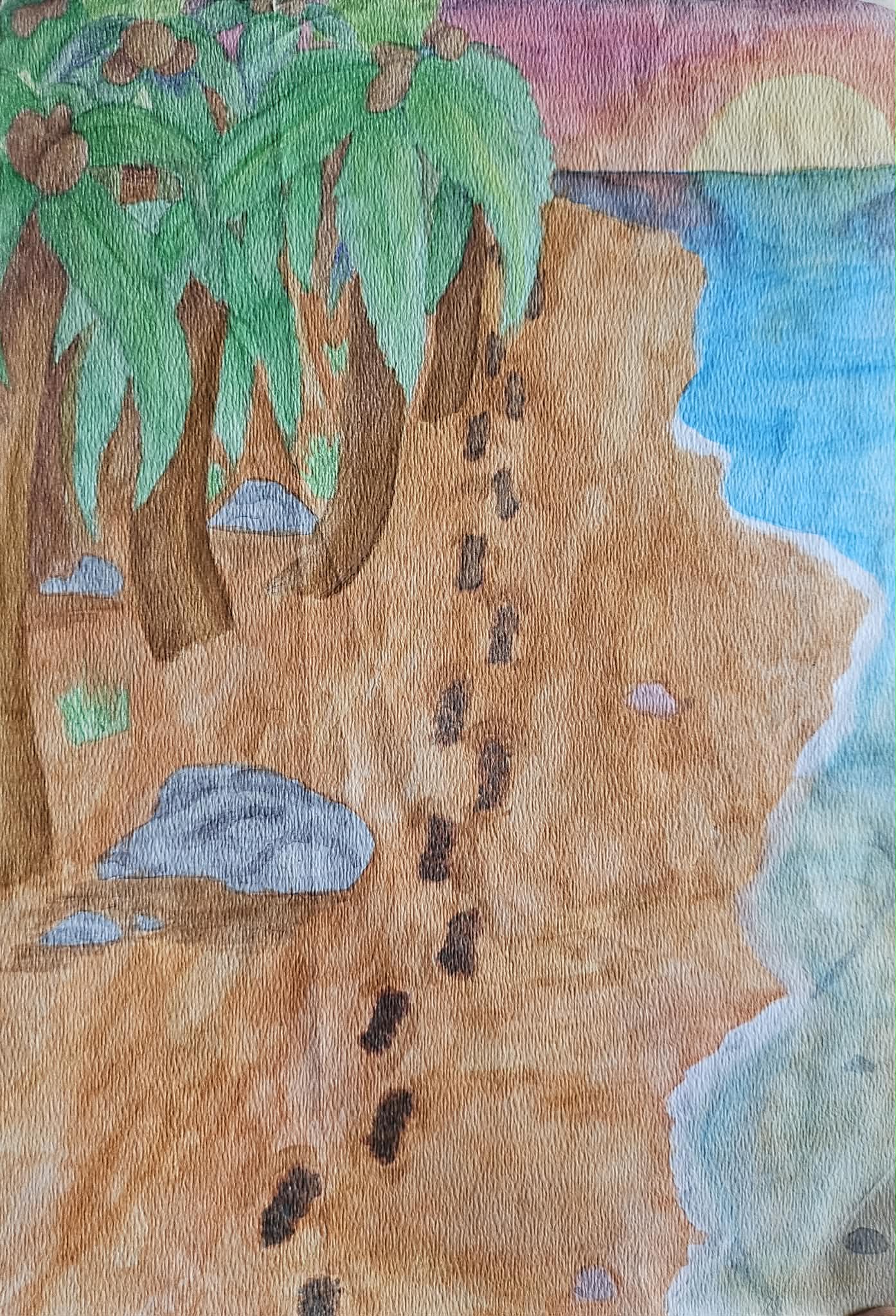
Learning to Swim through Neurodivergence, Chronic Illness, and the Shifting 100
A diagnosis is a heavy gift: it offers the profound relief of an answer, but it demands a price. The waves of my life always seem to grow larger, even with every swim lesson and adaptation I learn to make. For years, I believed that if I could just master the self-advocacy of having dyslexia or calm the weight of my anxiety, I would eventually reach a shore where the water was still. I built my life—and my career as an academic advisor—on the idea that every hurdle has a workaround and every student has a path. But as I face the rising tide of a new autoimmune journey, I am realizing that resilience isn't about reaching the shore. It’s about the strength it takes to keep your head above water when the ocean itself keeps changing form.
The words I heard over and over as a child were that I was simply "not trying." I have learned since then that the world’s perception of effort is based on a rigid, traditional standard of learning—a yardstick that was never meant to measure a brain like mine. In reality, one person's 100 percent will never look like another’s. I spent years exhausting myself trying to make my 100 percent mimic a neurotypical baseline, only to realize that the baseline itself was a ghost. Even more recently, I’ve discovered a deeper truth: your own 100 percent is not a static point on a map. It shifts and changes like the tides, often without warning. Some days, my 100 percent is a tidal wave of productivity and advocacy; other days, it is simply the quiet strength required to admit that my body or mind needs rest.
I have a memory of sitting in a quiet therapy office, clutching a clipboard and a pen that felt heavier than it should. As I worked my way through a standard intake form, I reached the section on anxiety. I remember my breath catching as I read the questions. It was as if the paper itself had been listening to my internal monologue. For the first time, I saw my invisible storms translated into clear sentences. It amazed me how much those questions understood the heavy tightness in my chest—a feeling I had spent years trying to explain and failing. In that moment, the diagnosis wasn't a label of brokenness; it was a guide. I had never felt so validated that my experiences were real, that they were documented, and that I wasn't just "not trying."
I carry that memory of validation with me into every advising appointment. I write my children's books because I want a child to turn a page and feel that same relief of being understood. At a recent vendor fair, a preschool teacher picked up a copy of Beyond the Huddle: Staying Warm on the Spectrum. As she turned the pages, I watched her eyes fill with tears. She spoke to me of the heartbreak of watching a child begin to show the clear signs of neurodivergence while their parents, gripped by fear or denial, refuse to accept the resources being offered to them. She felt my book was a way to bridge that gap—a gentle way to start a conversation that felt less like a clinical sentence and more like an invitation to understand.
Then there was the teacher who shared a story about her fourth-grade student, a young girl navigating the feelings of anxiety. After finishing The Waves of Anxiety, the student walked up to her teacher, clutched the book to her chest, and said simply, "She really gets it."
Hearing those words felt like a circle closing. To be the "she" who "gets it" is the highest honor I’ve ever received. It means that the tightness I felt in my own chest as a child, and the bitterness I’ve tasted in these new autoimmune tides, haven't been in vain. My writing had reached across the distance of age and experience to tell a ten-year-old girl that she wasn't just "not trying"—she was swimming, and someone on the shore was cheering her on.
For a long time, I thought I had mastered my swim lessons. I had mapped the currents of my dyslexia and learned to float through my anxiety. I was a professional navigator—an academic advisor who specialized in finding the hidden paths through rigid systems. But the arrival of an autoimmune disease felt like the ocean floor itself had suddenly dropped away. It was a new kind of tide, one that didn't just affect how I processed words or managed stress, but how my very joints moved and how my energy evaporated before the morning was even beginning.
The irony was not lost on me: I had spent my life advocating for the "invisible" brain, only to be met with an "invisible" illness of the body. Once again, I found myself facing that childhood ghost of "not trying." When the fatigue hits, it looks like a lack of motivation to the outside observer. I found myself reaching for the same tools I used as a child—patience, adaptation, and the refusal to measure my worth by society's standards.
There is a specific kind of exhaustion that comes from having to re-explain your existence every time the tide shifts. In my work at the university, I am surrounded by calendars, deadlines, and the high-speed hum of "potential." I guide students through the complexities of their degree requirements, often acting as the lighthouse for their own stormy semesters. But there are mornings now where the simple act of standing up feels like wading through deep, heavy sand. On those days, the irony tastes like salt. I am the expert on navigation, yet I am anchored by a body that has suddenly revoked its permission for me to move at the world's pace.
This "double invisibility" creates a strange internal dialogue. When my dyslexia makes a word feel just out of reach, I have the grace to continue on with my day—I’ve had twenty years of practice. But when the autoimmune fatigue pulls the plug on my energy at 10:00 AM, that old childhood voice whispers that I am failing the standard. It is a constant process of unlearning. I have to remind myself that resting is not the absence of trying; it is simply yet another change in my 100 percent.
My Lovely Life Library was born from this desire to share my story and help others feel heard, but I’ve discovered that the books often act as my own lifelines, too. Many of my stories are where I hold my own struggles and emotions when they feel too vast to carry inside. I wrote The Nervous Butterfly: Flight of Heart during the raw, early days of my autoimmune diagnosis. At a time when my body felt like an unfamiliar and often hostile territory, it was a profound comfort to turn that fear into something positive—to watch a character find their own way to fly even when it was different from their hopes. It was my way of taking the bitter in my life and turning it into something sweet.
In those pages, I wasn't just an academic advisor or a patient; I was a creator. Now, when I see a child clutching one of my books, or when I look into the eyes of a student at the university who is struggling to navigate their own new waves, I know exactly what to tell them. I tell them that the diagnosis is just the beginning. I tell them that their 100 percent is a moving target, and that is okay. But most importantly, I tell them that while the ocean is vast and the tides are unpredictable, they are never swimming alone.
Nellie Nakhel is an author, academic advisor, and the founder of Lovely Life Library. With a professional background in higher education and a deep commitment to inclusive storytelling, she has published ten children’s books designed to empower neurodivergent and disabled voices. Her work explores the intersections of resilience, identity, and the "shifting 100 percent," aiming to create spaces where every reader feels seen and valued.
https://lovelylifelibrary.com/
Instagram · nellienakhel_lovelylifelibrary