Book Review: The Handbook for the New God
by Matthew A. Walton
For Starters
As a reader with ADHD, I like having access to my books in every format: physical, Kindle, and audiobook whenever possible. And if I've become hyper-fixated on a story, good luck convincing me to put it down. So imagine my surprise when The Handbook for the New God managed to hold my full attention during the same week that The Parade of Horribles (Dungeon Crawler Carl Book 8, a series I'm completely obsessed with) was released. Instead of diving into Carl every chance I got, I found myself glued to my Kindle, following Kip and his band of misfit gods, saving The Parade of Horribles exclusively for my commute. That's about the highest praise I can give a book.
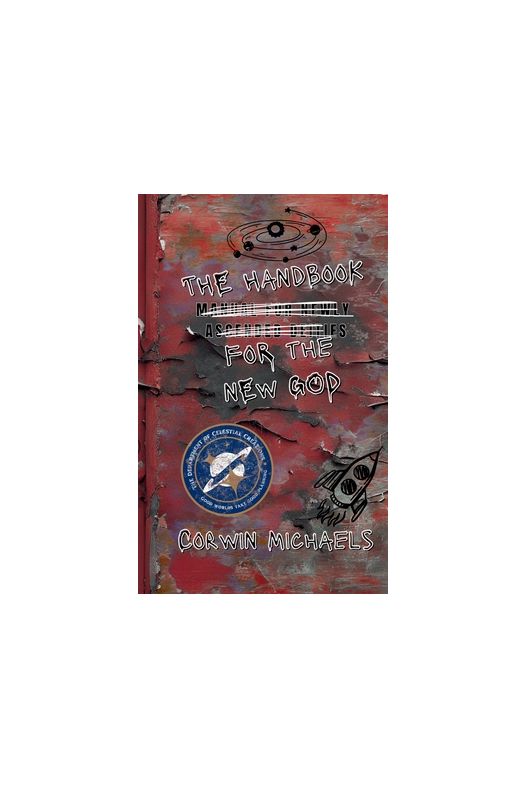
The Handbook for the New God by Corwin Michaels is a science fiction/fantasy novel that follows Kip and his ragtag group of newly minted gods as they navigate the bureaucracy of divinity while attempting to create the world of their dreams. Imagine The Hitchhiker's Guide to the Galaxy colliding with Guardians of the Galaxy, and you'll have a good sense of the novel's chaotic charm and irreverent humor. So, how does it hold up from an ADHD perspective? Let's dive in.
Attentive & Engaged
Simply put, this book kept my attention from beginning to end. The biggest reason? The characters.
As someone with ADHD, I found many of the cast surprisingly relatable. Their strengths, flaws, and unique ways of approaching problems felt authentic, making it easy to become invested in their journey. I genuinely cared about where each of them would end up. The pacing also deserves praise. Chapters are concise without feeling rushed, and nearly every one ends with just enough intrigue to make you say, "Just one more."
Then there's the worldbuilding of it all.
I'm a sucker for lore. It's one of the reasons I love fantasy, science fiction, and why Destiny 2 remains one of my favorite games. Michaels understands that worldbuilding isn't about dumping information onto the reader, it's about rewarding curiosity. He carefully sprinkles lore throughout the story, allowing readers to piece together the larger picture naturally. Every new revelation feels earned, making those "aha!" moments especially satisfying.
The novel also avoids the predictable "slow climb to one big climax" pitfall. Instead, it delivers a series of escalating highs, unexpected turns, emotional lows, and exhilarating surprises that continually renew your investment in the story.
Cognitive & Sensory Load
One of the things that impressed me most was how approachable the worldbuilding felt.
Science fiction and fantasy often overwhelm readers with unfamiliar terminology, extensive exposition, or dense mythology, expecting them to simply keep up. As a neurodivergent reader, that kind of information overload can quickly become overstimulating and pull me out of the story. The Handbook for the New God never crossed that line.
Michaels introduces concepts at a steady, manageable pace, providing enough context to keep readers grounded without interrupting the narrative. I never felt lost, nor did I feel buried beneath unnecessary exposition. Instead, I was free to experience the story through my own imagination, vividly picturing many of its wonderfully cinematic moments.
Emotional Regulation & Hyper-fixation
This book absolutely became a hyper-fixation for me.
When I wasn't reading it, I was thinking about it. I found myself wondering where the story would go next, replaying scenes in my head, and connecting new pieces of its mythology. Emotionally, the novel strikes an excellent balance. It delivers moments of genuine surprise, laugh-out-loud humor, heartfelt emotion, and tension without ever becoming overwhelming. The emotional beats felt earned, allowing me to stay fully immersed rather than emotionally exhausted.
Neurodivergent Relatability
For me, this is where The Handbook for the New God truly shines. Popular media often portrays neurodivergence through a narrow lens, reducing it to a handful of familiar stereotypes. Michaels avoids that trap entirely.
Each member of Kip's group feels like they represent a different expression of neurodivergence. Some overflow with boundless energy, others become intensely focused on their passions, while still others crave routine, order, or predictability. Rather than presenting neurodivergence as a single experience, the novel acknowledges its incredible variety.
I won't spoil which characters embody which traits, that's part of the joy of discovering the story yourself, but I suspect many neurodivergent readers will find at least one character who makes them feel genuinely seen.
Final Verdict
I cannot recommend The Handbook for the New God highly enough, particularly for neurodivergent readers.
It's funny, heartfelt, imaginative, and remarkably accessible without sacrificing depth. More importantly, it offers characters who feel authentic rather than performative and a world that invites curiosity instead of demanding memorization.
My only complaint is that I wasn't ready to leave these characters behind. I would happily spend another adventure alongside Kip and his fellow gods, and I sincerely hope Corwin Michaels returns to this universe someday.
I've also heard an audiobook is in the works, which gives me the perfect excuse to experience the journey all over again.